
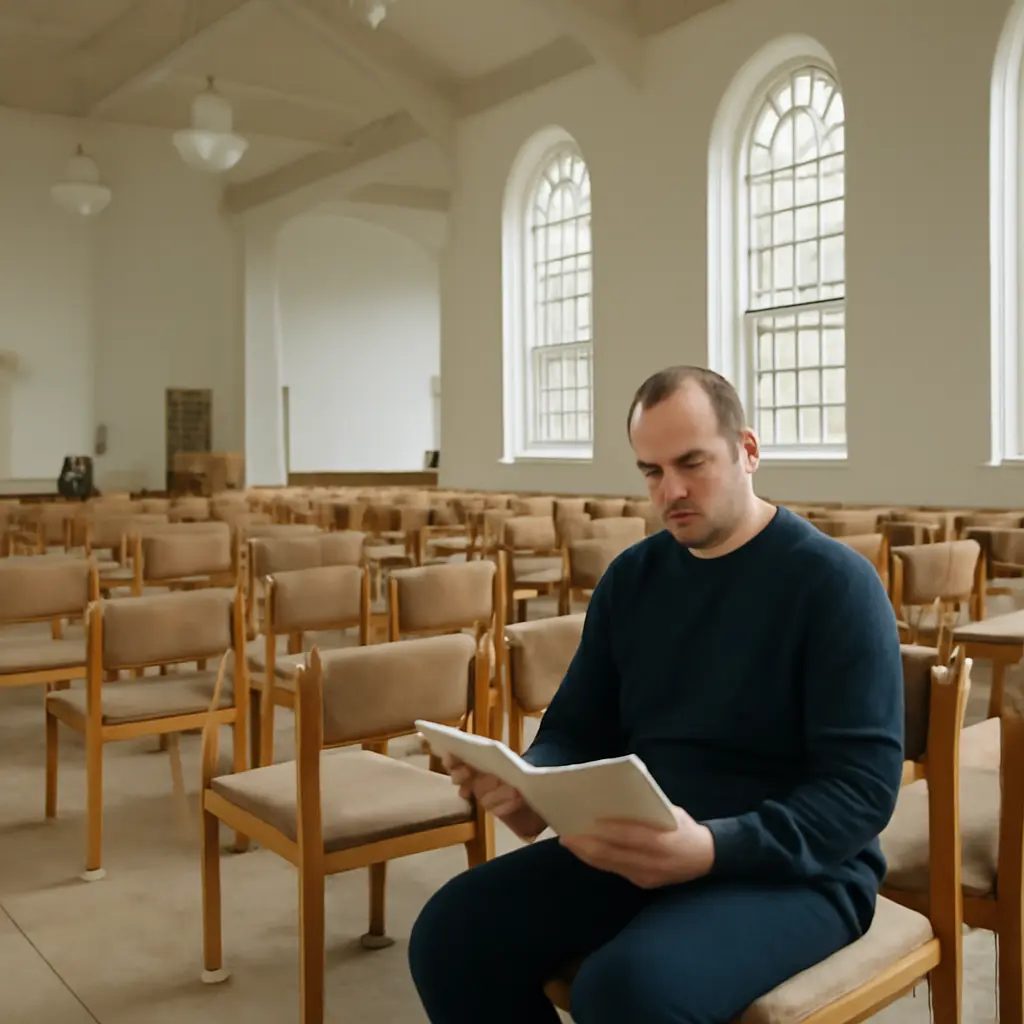
Adapted worship is the practical adjustment of a religious service, ritual, or spiritual practice to fit a person’s access needs, circumstances, or way of participating. It is often smaller than people imagine: a clear explanation, a quieter seat, a printed prayer, permission to move, or a remote option may be enough to make worship more usable. The World Health Organization estimates that 1.3 billion people—about one in six worldwide—experience significant disability, while U.S. research shows that many people with disabilities face barriers to religious participation. Small, thoughtful changes can therefore have substantial value without requiring a complete redesign of a congregation’s worship.
Adapted worship improves access through practical adjustments
Adapted worship means making a worship experience more accessible while preserving its spiritual purpose and communal character. It is not a single program or specialized service. It is a set of flexible practices that respond to differing needs in hearing, vision, mobility, communication, sensory processing, cognition, health, and life circumstances.
The National Organization on Disability’s research on faith communities has documented a persistent participation gap between people with and without disabilities. The specific obstacles vary by congregation, but they often include inaccessible buildings, limited communication accommodations, and uncertainty about how to welcome someone with a disability. Adaptation addresses these barriers directly. It can be as modest as making service information available in advance or as involved as providing interpretation or an accessible entrance.
The central principle is proportionality: identify the barrier, ask what would help, and make a reasonable adjustment rather than assuming that every participant needs the same solution. This approach connects physical access with communication, sensory comfort, and genuine belonging.
Physical access and mobility
Physical adaptation makes it possible to enter, move through, and participate in a worship space. Examples include step-free routes, reserved wheelchair spaces integrated into seating, clear aisles, accessible restrooms, and seating that allows a companion to sit nearby. A congregation can also explain its entrances and parking arrangements before a visitor arrives.
In the United States, the Centers for Disease Control and Prevention reports that more than one in four adults has a disability. That broad category includes mobility limitations as well as other disabilities, so it should not be read as a count of people who use wheelchairs. It does, however, underline why access should be treated as an ordinary planning consideration rather than an exceptional request.
Communication and sensory access
Communication adaptation helps people receive and take part in worship through more than one channel. Useful options may include captions, sign-language interpretation, hearing-assistance devices, large-print or digital texts, spoken descriptions of visual material, and a quiet space for anyone who needs a break. Advance notice of music volume, lighting, or changes in routine can also reduce uncertainty.
These options are relevant to more than one group. Captions can help people who are Deaf or hard of hearing, worshippers learning the language, and anyone who missed a spoken phrase. Large print may assist people with low vision or those who simply find it easier to read. A quiet room can support people with sensory sensitivities, young children, or anyone temporarily overwhelmed.
Cognitive, developmental, and participation supports
Cognitive and developmental adaptations make the structure and expectations of worship easier to understand and navigate. A congregation might offer a simple service outline, explain unfamiliar rituals, use plain language, provide visual schedules, or allow a person to participate without speaking, standing, or making eye contact. These supports are useful when someone has an intellectual or developmental disability, memory difficulty, anxiety, or limited familiarity with the service.
A useful test is whether the person has meaningful choices. Adaptation should not turn participation into a performance standard. Someone may listen rather than recite, step out and return, or join only selected parts of a ritual. The goal is access to worship, not identical behavior from every worshipper.
Adapted worship works best when it is individualized and ordinary
An effective adaptation is matched to the person and situation, not chosen from a checklist alone. The same change can help one person and be irrelevant to another. Asking respectfully, offering choices, and protecting privacy are therefore as important as the accommodation itself.
The bridge from an individual request to a welcoming congregation is routine practice. When accessible materials, clear directions, and flexible participation are built into ordinary worship, people do not have to repeatedly disclose a need or negotiate every detail at the door.
Small changes with high practical value
Many adaptations require planning more than expense. Sharing a service order beforehand, identifying a quiet area, keeping aisles clear, using a microphone consistently, and announcing transitions can improve access immediately. A congregation can also invite visitors to describe access needs without requiring a diagnosis.
These modest steps are especially useful because they reduce uncertainty. A person who knows where to enter, how long a service lasts, and whether a quiet space is available can make an informed decision about attending. Clear information is itself an accessibility measure.
Choice, dignity, and participation
Adapted worship is not simply physical presence in a religious building. It means having a dignified opportunity to engage, observe, contribute, or take a break according to one’s needs. Leaders should address the person directly, ask before offering physical assistance, and avoid treating an accommodation as a favor that creates a debt.
The Americans with Disabilities Act establishes accessibility obligations for many public accommodations in the United States, though its application to religious organizations has specific limits and exceptions. Regardless of legal requirements, congregations can use accessibility principles as a guide to hospitality and evaluate changes with the people who will use them.
A practical example: preparing for a first visit
Imagine a visitor who is hard of hearing and anxious about unfamiliar routines. Before the service, a congregation can provide the order of worship online, explain where accessible seating is located, and identify whether captions or a hearing-assistance system are available. During the service, leaders can use microphones consistently and announce transitions. Afterward, they can ask privately whether the arrangements were helpful.
No single adjustment guarantees that every need is met. But this sequence—share information, provide options, communicate clearly, and invite feedback—turns a broad commitment into observable practice. It can be adapted for mobility access, sensory needs, language access, and other circumstances.
Adapted worship is most sustainable as a shared practice
Sustainable adaptation does not depend on one volunteer remembering every detail. Congregations can assign responsibility, review access before major services, maintain equipment, and include disabled people in decisions about worship spaces and practices. Feedback should lead to practical changes, while recognizing that needs and preferences differ.
A simple review can ask whether people can find access information, enter and move through the space, follow spoken and printed content, take part in ways that work for them, and request an adjustment without embarrassment. The answers can guide improvements over time. Where major construction or legal questions arise, congregations should consult qualified accessibility professionals and relevant local requirements.
Conclusion: adapted worship makes welcome concrete
Adapted worship is often smaller than people think and more useful than a specialized program alone. Physical access, communication support, sensory flexibility, and cognitive clarity are related forms of the same practice: removing barriers so people can participate with dignity. The scale of disability worldwide and the documented participation barriers in faith communities make this work relevant to congregations of every size.
Start with one practical step: publish access information, ask worshippers what would help, or review a service from arrival through departure. Then make the improvement routine and learn from the people it serves. Small changes can open the way to fuller participation and a more welcoming community.
Sources: World Health Organization, “Disability,” https://www.who.int/news-room/fact-sheets/detail/disability-and-health; Centers for Disease Control and Prevention, “Disability Impacts All of Us,” https://www.cdc.gov/disability-and-health/articles-documents/disability-impacts-all-of-us.html; National Organization on Disability, “Religion and Disability: A Study on the Religious Participation of People with Disabilities,” https://www.nod.org/religion-and-disability/; U.S. Department of Justice, “ADA Requirements: Religious Entities,” https://www.ada.gov/topics/title-iii/