
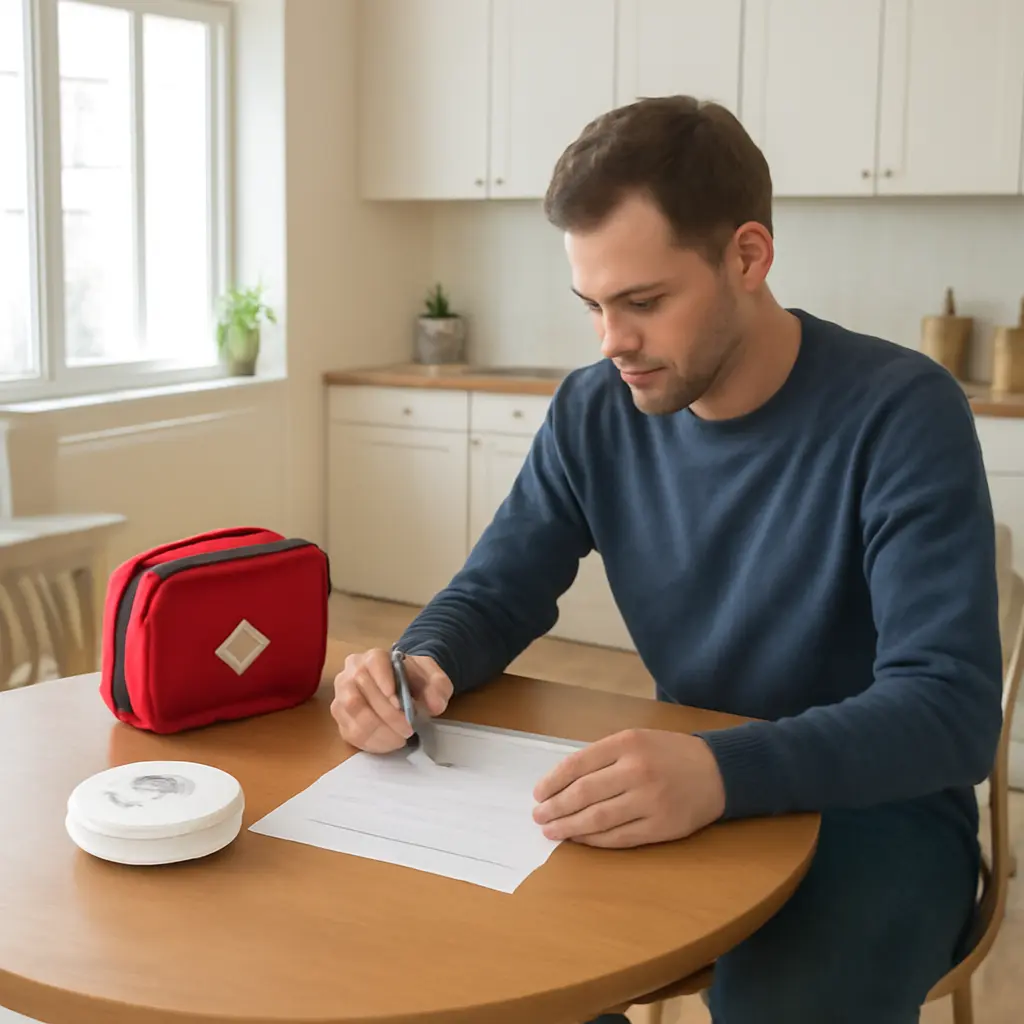
Autistic independent-living safety planning is a personalized process for identifying risks, preparing practical responses, and arranging supports that help an autistic person live as safely and autonomously as possible. It goes beyond emergency contacts: it can cover home hazards, health care, communication, sensory needs, transportation, finances, digital privacy, and what to do when routines or support arrangements change. The CDC estimates that about 1 in 31 U.S. children aged 8 was identified with autism in 2022; that figure describes children, not the number of autistic adults living independently, but it underscores why planning must address needs across the lifespan. A sound plan is individualized, strengths-based, rehearsed, and reviewed with the person whose life it concerns.
Safety planning defines autistic independent-living preparedness
The National Institute of Standards and Technology defines emergency preparedness in terms of the knowledge and capacities developed before an incident to anticipate, respond to, and recover from its effects. Applied to autistic independent living, safety planning means turning that broad preparedness principle into person-specific routines, tools, and support arrangements. No single checklist can predict what will work for every autistic adult: communication style, sensory profile, health conditions, decision-making preferences, and available resources differ substantially.
The approach is best understood through related forms of planning: everyday hazard reduction, personal emergency response, health and communication preparation, and continuity planning when caregivers, services, or housing change. These areas overlap. For example, a power outage is an emergency, but planning for it may also require medication storage, backup lighting, a sensory strategy, and a way to contact a trusted person.
Person-centered and autonomy-supportive planning
Person-centered planning starts with the autistic person’s own priorities and preferred ways of communicating. It distinguishes a safety support from a restriction: the aim is to reduce preventable harm while preserving privacy, dignity, choice, and ordinary adult decision-making. The National Council on Disability has emphasized the importance of autonomy and community living for people with disabilities. In practice, this means asking what the person wants help with, what they already manage well, and how support should be offered before creating rules or monitoring systems.
A useful plan records strengths alongside risks. Someone who finds phone calls difficult may be highly capable with text, written instructions, or a visual checklist. A supporter can adapt the response method rather than assume the person cannot seek help. Consent should be explicit and revisited, particularly when a plan involves sharing diagnoses, location information, medical details, or access to the home.
Risk assessment and practical prioritization
A personal risk assessment identifies hazards, how likely they are, how serious the consequences could be, and which low-burden controls can reduce exposure. Common categories include cooking and fire, falls, medication mistakes, missed appointments, scams, getting lost, extreme weather, and disruptions to electricity or internet access. The National Fire Protection Association identifies cooking as a leading cause of home fires and home fire injuries in the United States, making kitchen routines, smoke alarms, and an exit plan sensible priorities.
Prioritization should reflect the person’s actual home and routines rather than a generic list. A brief, collaborative review can ask: What has gone wrong before? Which situations are difficult to notice or respond to? What could prevent a small problem from becoming an emergency? For example, a person who regularly forgets food on the stove might choose an induction cooktop with automatic shutoff, a timer, or prepared meals—not an unnecessarily broad loss of cooking independence.
Home safety translates planning into daily routines
Home safety combines environmental changes with predictable habits. The most useful measures are easy to understand, visible when needed, and matched to the person’s sensory and executive-function needs. Small design choices can prevent avoidable problems without turning the home into a clinical setting.
Fire, cooking, and household hazards
Fire planning includes working smoke alarms, an accessible extinguisher where appropriate, clear exits, and a practiced route to a meeting point. The U.S. Fire Administration recommends smoke alarms on every level of a home, inside bedrooms, and outside sleeping areas; alarms should be tested and maintained according to manufacturer instructions. Because a loud alarm may be painful or disorienting for some autistic people, planning should include advance familiarization with its sound and a realistic response routine rather than disabling the alarm.
For cooking, options include a timer that is hard to miss, an automatic shutoff device, a written “stay in the kitchen” cue, or choosing appliances that fit the person’s skills. Store cleaning products and medications in clearly designated, secure locations when that reduces risk, and keep frequently used items consistent. A home walkthrough should also check trip hazards, safe pathways, bathroom supports if needed, and whether emergency responders can find the entrance.
Sensory-aware emergency responses
Sensory-aware planning anticipates how alarms, crowds, uniforms, bright lights, touch, or unexpected questions might affect a person during an emergency. The plan can specify helpful communication approaches—such as one speaker at a time, literal language, extra processing time, or written prompts—along with strategies the person has chosen, such as ear protection when safe to use. These details can be written on a voluntary emergency information card or stored in a phone, with the person deciding what is shared.
Practice matters because a response that is technically correct but unfamiliar may be hard to use under stress. Rehearse an evacuation at a quiet time, then adjust the plan if a sound, route, or instruction creates an unexpected barrier. The goal is not to force tolerance of distress; it is to make the safest available action more understandable and manageable.
Communication and health planning support safer decisions
Health and communication planning help the person explain needs, receive care, and make choices when routine support is unavailable. Autism itself does not determine a person’s medical needs or ability to make decisions, so plans should be based on the individual rather than assumptions about the diagnosis.
Medical information and accessible communication
A concise health summary may list current medications, allergies, relevant conditions, communication preferences, emergency contacts, and what helps the person understand information. It should be accurate, easy to find, and shared only with the person’s consent except where disclosure is legally necessary. The Autistic Self Advocacy Network’s guidance on healthcare emphasizes that autistic people should be involved in decisions and that providers should make communication accessible.
Prepare alternatives for moments when speech is difficult or unavailable: a notes app, communication device, printed card, or prewritten message. A person might save a short statement such as, “I need extra time to process questions. Please speak directly to me and give one instruction at a time.” This is useful in clinics, pharmacies, and emergency departments, but the wording should reflect the individual’s own preferences.
Medication, appointments, and health changes
Medication safety can involve a consistent storage location, a pharmacy refill reminder, a checklist, or a dispenser selected with a clinician or pharmacist. The U.S. Food and Drug Administration advises patients to keep an up-to-date medication list and discuss medicines with health professionals. Any device or reminder system should be tested for usability, and medication changes should be confirmed with the prescribing professional rather than inferred from a label or online search.
Appointments are safer when logistics are planned as carefully as the visit itself. Confirm the time and location, transportation, expected waiting conditions, and a way to ask for clarification. If a new symptom or health change is difficult to describe, a brief written record of what changed, when it began, and what affects it can help the person communicate without requiring perfect recall under pressure.
Emergency and continuity planning prepare for disruption
Emergency planning addresses acute events; continuity planning addresses what happens when ordinary supports are interrupted. Both are essential because a plan that depends on one person, one device, or one route may fail precisely when it is needed.
Personal emergency plans and check-ins
A personal emergency plan states whom to contact, where to go, how to leave, and what to do if the first option is unavailable. The Federal Emergency Management Agency recommends preparing for local hazards, making a household communication plan, and assembling supplies for basic needs. For an autistic adult, the plan may also include preferred communication formats, sensory supports, backup transportation, and a familiar contact who can help interpret changing instructions.
A check-in arrangement should be agreed rather than imposed. Decide how often to check in, what counts as a missed check-in, how long to wait before escalating, and which backup person to contact. Include a way to cancel or change the arrangement so that ordinary delays do not automatically trigger an intrusive response. Share only the minimum information needed for the arrangement to work.
Utilities, supplies, and backup support
A disruption plan considers food, water, medication, charging, temperature control, and access to essential services. FEMA’s emergency preparedness guidance recommends supplies for several days, while recognizing that needs vary by hazard and household. A personalized kit might include familiar shelf-stable foods, prescribed medication as arranged with a clinician, a power bank, a flashlight, ear protection, copies of key information, and comfort items. Check expiration dates and rotate supplies so they remain usable.
Identify more than one support route: a trusted neighbor, a family member or friend, a building manager, a local disability organization, or a service provider. Where power-dependent medical equipment or temperature-sensitive medication is involved, ask the relevant healthcare professional and utility provider about backup arrangements. Do not rely on a single emergency contact who may be traveling or affected by the same incident.
Community, digital, and financial safety extend independence
Independent living also involves navigating public spaces, online services, and financial decisions. These areas call for practical skills and accessible safeguards, not blanket restrictions on social contact or technology.
Transportation and community navigation
Community safety planning covers familiar routes, travel disruptions, and how to request assistance. A person may save destination details, transit alternatives, and a trusted contact in a phone or paper backup. Practice a route at a manageable time and identify landmarks, staffed locations, and a clear fallback if a service is canceled. The plan should account for sensory load, changes to schedules, and the person’s preferred way of asking for help.
A real-world example is a commuter who finds unexpected platform changes difficult. A personalized plan might include transit alerts, a screenshot of the usual route, a prepared question to show staff, and a backup ride option. This supports independent travel while addressing the specific point where difficulty tends to arise.
Digital privacy, scams, and financial safeguards
Digital safety means protecting accounts and personal information while retaining access to useful technology. The Federal Trade Commission advises consumers to use strong, unique passwords and multifactor authentication where available, and to be cautious about unexpected requests for money or sensitive information. A practical routine is to pause before responding to urgent messages, verify requests through a known contact method, and avoid sharing passwords or verification codes.
Financial safeguards can include transaction alerts, a spending plan, secure document storage, and a trusted person available for discussion if the account holder chooses. Support should be transparent and proportionate; taking control of someone’s money without consent or legal authority is not a safety plan. If exploitation is suspected, contact the relevant financial institution and local adult-protection or legal resources, while respecting the person’s rights and immediate safety.
Review and rehearsal keep the safety plan usable
A safety plan is a living document, not a one-time form. It should be reviewed after a move, health change, new medication, change in support staff, serious near miss, or major change in routine. A scheduled review—such as every six or twelve months—can also catch outdated phone numbers, expired supplies, and plans that have become too complicated.
Build, test, and update a practical plan
- Ask the autistic person which situations they want to plan for and what support they prefer.
- Choose a small number of realistic priorities, beginning with risks that could cause serious harm.
- Write short, specific steps in the person’s preferred format, such as a checklist, visual sequence, phone note, or audio reminder.
- Practice the steps in a calm setting and revise any part that is confusing, inaccessible, or unnecessarily restrictive.
- Store essential information where it can be found, agree who may access it, and set a review date.
A simple chart can make responsibilities visible without implying that every autistic person needs the same support. For example, a “risk / preferred response / backup” table could list a power outage, the person’s chosen response, and an alternate contact. The chart is most useful when the individual owns or approves it and can change it as circumstances evolve.
Conclusion: Autistic independent-living safety planning balances preparedness and choice
Effective safety planning connects person-centered risk assessment with safer home routines, accessible health communication, emergency and continuity arrangements, and community, digital, and financial safeguards. The evidence supports preparedness, but the details must be individualized: population statistics cannot tell us what a particular autistic adult needs. The strongest plan is one the person understands, consents to, can use under stress, and can revise when life changes. Start with one practical priority, involve the person in every decision, rehearse the response, and consult relevant clinicians, emergency-preparedness services, or disability advocates for specialized needs.
Sources: Centers for Disease Control and Prevention, Data and Statistics on Autism Spectrum Disorder, https://www.cdc.gov/autism/data-research/; National Institute of Standards and Technology, Community Resilience Planning Guide for Buildings and Infrastructure Systems, https://www.nist.gov/community-resilience/planning-guide; National Council on Disability, Deinstitutionalization: Unfinished Business, https://www.ncd.gov/report/deinstitutionalization-unfinished-business/; National Fire Protection Association, Home Cooking Fires, https://www.nfpa.org/education-and-research/research/nfpa-research/fire-statistical-reports/home-cooking-fires; U.S. Fire Administration, Smoke Alarms, https://www.usfa.fema.gov/prevention/home-fires/prepare-for-fire/smoke-alarms/; Autistic Self Advocacy Network, Health Care, https://autisticadvocacy.org/policy/health-care/; U.S. Food and Drug Administration, Your Medicine: Be Smart, Be Safe, https://www.fda.gov/drugs/resources-you-drugs/your-medicine-be-smart-be-safe; Federal Emergency Management Agency, Make a Plan, https://www.ready.gov/plan; Federal Trade Commission, How To Recognize and Avoid Phishing Scams, https://consumer.ftc.gov/articles/how-recognize-and-avoid-phishing-scams; Federal Trade Commission, Secure Your Accounts, https://consumer.ftc.gov/articles/secure-your-online-accounts.